
Jazz is as old as the 20th and 21st centuries. It represents America’s towering and most original musical achievement. Modern jazz-the focus of my platform (which generally excludes early and swing eras in jazz) runs from the bebop generation of the 1940’s and 50’s through to the present day.
It is my view that modern jazz enjoyed its most intensively creative period in the 30 years between Charlie Parker, Dizzy Gillespie and Bud Powell inventing bebop and Miles Davis’s explorations in electronic jazz or jazz rock in the late 60’s and early 70’s.
Most of what came after this period (and this is probably my most controversial contention) involves future generations of jazz musicians exploring and developing the musical legacies of the true jazz revolutionaries whom I’m name checking in this piece. This is by no means to suggest that contemporary jazz has little new to offer, rather that the building blocks of the modern jazz we hear now in whatever settings-trio, vocalists, combos, large orchestras is still mainly influenced by a small cohort of foundational jazz geniuses.
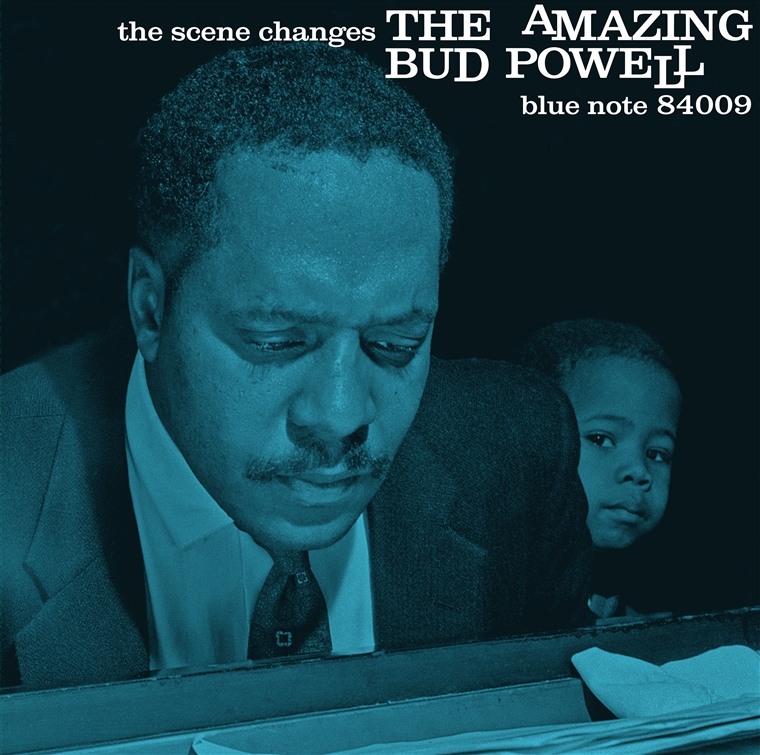
The Amazing Bud Powell
To enter my pantheon of jazz revolutionaries candidates, need to tick the following boxes;
- Instantly recognizable as instrumentalists- through their sound, touch, timbre, tone swing feel etc.
- Having a decisive and discernible impact on the way jazz developed both during their lifetimes and through to the present day.
- Their influence on future generations of musicians extends beyond their own instruments. Thus, Bird’s oeuvre impacts on all jazz players not just saxophonists.
- Bequeathing a body of original compositions that continue to form part of the jazz lexicon
- Being recognized as the lead instigator of a new genre or genres in jazz
- Being recognized as maestros within the wider jazz community-musicians, conservatoires, the jazz public jazz critics and the wider worlds of music
With these criteria in mind, I would suggest that the following musicians merit inclusion in the exclusive pantheon of jazz revolutionaries;
- Duke Ellington – piano and big band leader (1899-1974)
- Thelonious Monk – piano (1917-1982)
- Charlie Parker – alto sax (1920-1955)
- Bud Powell – piano (1924-1966)
- Miles Davis – trumpet (1926-1991)
- John Coltrane – saxophones (1926-1967)
- Bill Evans – piano (1929-1980)
- Sonny Rollins – tenor sax (b. 1930)
It is interesting to note that with the exception of Duke Ellington the remaining six musicians were all born within ten years of each other.
Duke Ellington is the oldest and earliest musician on the list and led easily the most intensive and active musical life over a fifty year career. He composed over 1000 tunes (many in collaboration with Billy Strayhorn) varying from 12 bar blues to his longer form devotional music, suites, commissions and scores for musicals and movies. No one has written more jazz standards than Duke Ellington.
Duke often spoke of his orchestra as being his instrument, and it was this ensemble and the skilled instrumentalists that it contained for whom he wrote quite specifically. This was one of the reasons why he was able to retain the services of such individual voices as Johnny Hodges, Harry Carney, Paul Gonsalves and Rex Stewart for decades. He also referred to himself with deliberate self-deprecation as “the piano player” and it was only after his death that Duke’s significance as a pianist became fully recognized. Listen to the track from Money Jungle and you may be surprised to discover that Duke Ellington was the pianist laying down challenges to Max Roach and Charles Mingus.
And naturally Duke has set the standard and left an indelible mark on every big band performance, arranger, writer and leader during and well beyond his lifetime. It was Ellington’s unrivalled capacity to create interesting sound worlds particularly between his brass and sax sections, even on his most hackneyed and too regularly played tunes (how many thousand times did his orchestra play Take the A Train?!) that marked him out and set the standard for all the big bands that followed Duke.
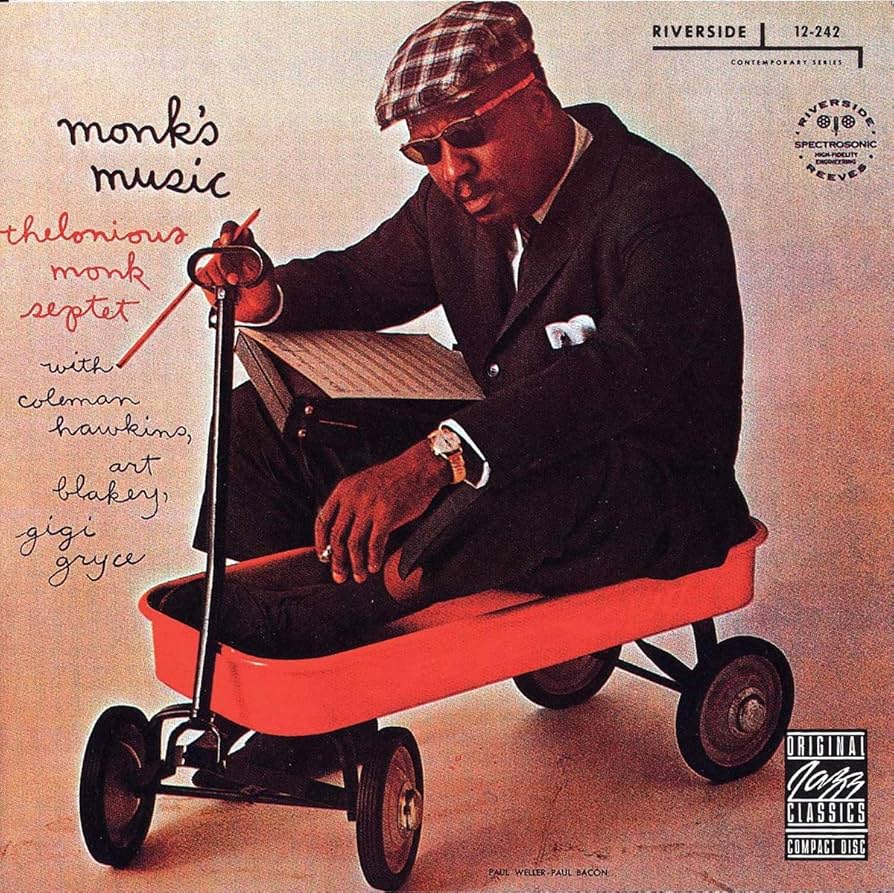
Thelonious Monk
Thelonious Monk was one of the founding fathers of bebop but was the last to achieve wider recognition and album sales commensurate with his status within the jazz community where his originality was immediately recognized.
Monk left a catalogue of 78 original compositions, some obscure and/or impossibly challenging and rarely played but most forming a central part of the contemporary jazz repertoire. While he was initially (and correctly) characterized as a modernist he never forgot his grounding in and love for boogie woogie and stride piano styles which would frequently emerge during the course of more “out” improvisations.
His characteristic angular, percussive sound and style and his reinvention of chromatic runs contributed to his uniqueness, and he certainly passes the “immediately recognizable” test. No one plays or played like Monk, yet his influence is everywhere- listen to Stan Tracey or Jaki Byard for example- and his compositions continue to challenge the greatest jazz performers.
Although Monk did not achieve the same legacy as a band leader as Duke or Art Blakey his six month residency at the Five Spot in New York in 1957 had a foundational impact on the future career of John Coltrane. And his role as a friend and protector to the equally legendary and more mentally fragile Bud Powell insured that Bud’s star could continue to burn albeit less brightly through to the end.
Charlie Parker. It is impossible to know where to start in describing the genius and continuing impact of Charlie Parker through his sadly short life. His life had a legendary quality right back to his early years in Kansas City where he developed a taste for 12 hour daily practice sessions, became a heroin user and a father at 16. By the time of his second coming to New York in 1945 he was truly ready, and the worldwide jazz community immediately took notice.
I am sure that on a subsequent post I will attempt to characterize Bird’s turbulent, short and astonishingly creative artistic life. For now, I think it is important to recognize that he was the godfather of the bebop generation, playing in small clubs, not for dancers for minimal remuneration. His music was astonishingly creative, setting a standard and led a classic junkie jazz lifestyle that so many of his followers tried to exemplify, none fully succeeded, and too many died young in the process.
The big question that I return to with Bird is “What would he have gone on to achieve had he lived?” In his last years he recorded with strings and expressed an interest in moving to Paris to study with Edgar Varese. The one thing seems to be certain, had he lived he would have gone down very different and equally compelling musical paths than those he trailblazed during his lifetime.
For now, we have his recordings, many from an era when jazz recordings were restricted to three minute takes. No one has ever put more creativity into a two chorus solo than Charlie Parker.
Bud Powell. Of all these remarkable musicians Bud Powell was the only one who could be described as a child prodigy. Born and raised in Harlem to a musical family and largely self-taught Bud showed mastery of complex classical pieces in early childhood. Powell laid down, arguably more than anyone from his cohort the harmonic and melodic architecture of the emerging bebop language in the late 1940’s.
His early Blue Note recordings released under the two volume title The Amazing Bud Powell did not understate his genius. At this stage before the first of his increasingly fragile mental health episodes interrupted his career and, ultimately his musical fluency, revealed a readymade jazz genius playing a selection of both originals and standards at lightning fast bebop tempi with tightly packed improvisations pouring out of him, while also showcasing a deep affinity with jazz ballads. Bud effortlessly covered the whole modern jazz waterfront.
Bud Powell deserves his place at the top table of modern jazz based on his Blue Note recordings alone plus his significant influence on the cream of the bebop generation
John Coltrane was not a child prodigy. Everything we hear from him in his unusually long (by 50’s bebop standards) apprentice years and in his final ten pinnacle years was learnt, the product of one of the most punishing practice regimes in the annals of 20th century music.
By his mid-20’s he had mastered his “sheets of sound style” stacking complex harmonies one on top of the other often at impossibly fast tempi. He spent almost a year working out the labyrinthine harmonic structure of his landmark composition Giant Steps which became the poster tune for his rapid fire and long form improvisations. Listen carefully to the recording and you will hear Tommy Flanagan a highly experienced pianist struggling to keep up! Mastering the complex harmonies of Giant Steps remains an essential right of passage for any jazz musician with serious aspirations
Following his impactful participation within the musical universe of Monk and Miles (twice) and at the relatively advanced age of 32 he was ready to go his own way, to be a leader. His classic quartet provided precisely the context and creativity that he was looking for with A Love Supreme representing the summit of his later chapter save for his final two years when, joined by Alice Coltrane on piano and harp he was moving into even freer and more deeply spiritual directions.
Miles Davis also ticks all the boxes! As an18 year old and freshly arrived in New York Miles Davis benefited from an intensive two year apprenticeship with Charlie Parker and from that point on was a leader in every sense. As a composer, as an iconoclast, as the leader of two of the greatest jazz combos in the history of jazz. Miles never stood still, was always looking to break new ground, to play the same set list in radically different ways.
In his distinctive style Miles was also a major spotter and developer of jazz talent providing new and established band members with the context in which to sign and to become leaders in their own write. His long association with Gil Evans and his classic 1950’s sextets and 1960’s quintets would alone confirm his position at the jazz summit. And throughout his 45 year career whatever the context Miles always sounded like Miles.
Bill Evans. I have written elsewhere about the importance of the piano trio within the history of modern jazz and without doubt Bill Evans set the gold standard for trio jazz. Click here to read the episode.
Every piano trio playing today pays some degree of homage to the legacy of Bill Evans
His touch, uniquely complex harmonic voicings, his active encouragement for his bass players to foreground their contributions and his capacity to swing in all contexts and tempi all contribute to his status as a true maestro.
Despite his destabilizing narcotics problems Bill toured and recorded relentlessly and always at the very highest creative standard. One of my cherished memories was hearing Bill Evans hunched over the keyboard with Eddie Gomez on bass-at the start of his long tenure with the trio- at Ronnie Scott’s in the early 70’s.
While Bill Evans did not bequeath a significant catalogue of originals he was recognized as a stellar interpreter and re-interpreter of jazz standards
Kind of Blue, possibly the most consequential album in jazz brought together Evans, Miles and Coltrane at the height of their powers and I include two tracks from this session, one of which, Blue in Green Bill wrote despite Miles claiming authorship.
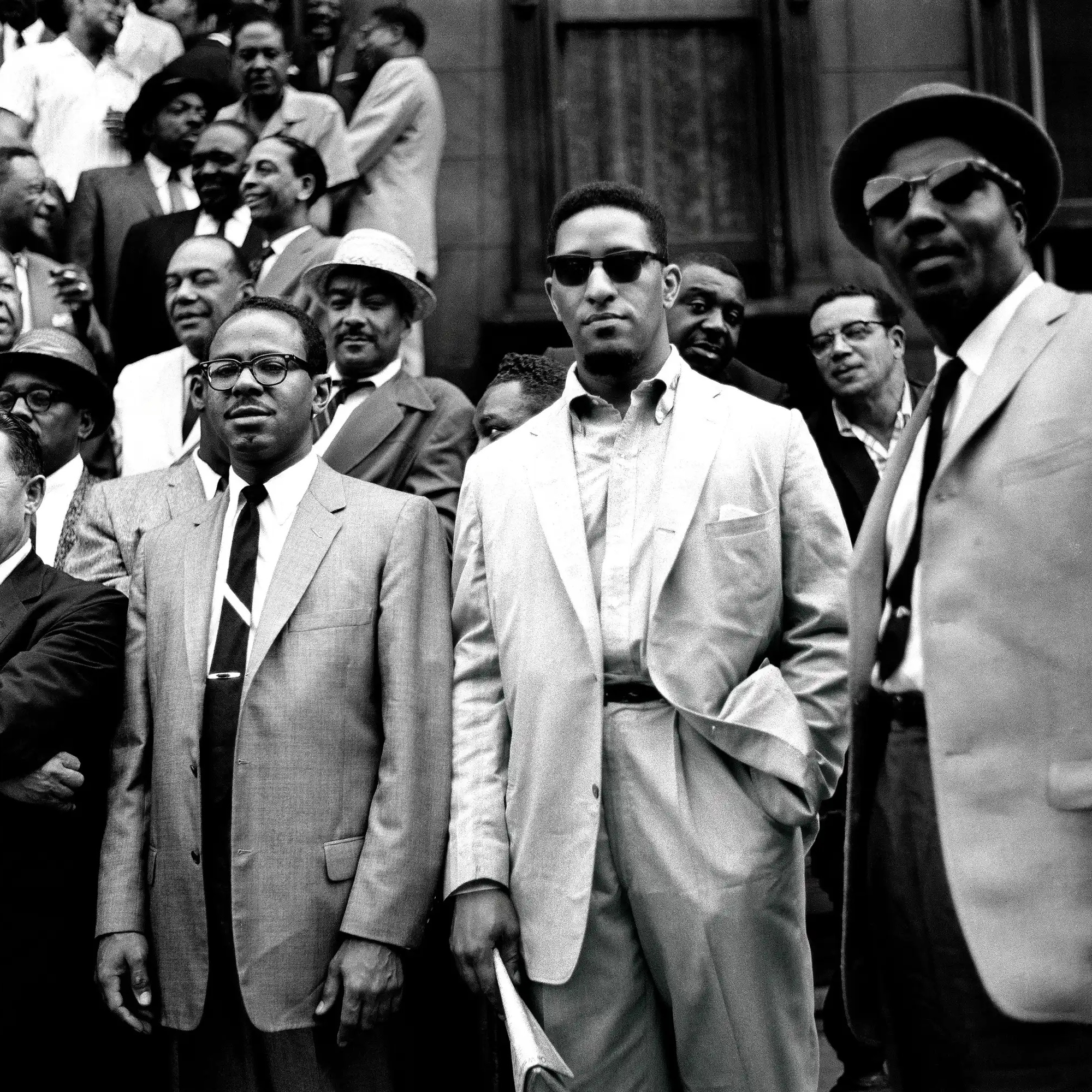
Sonny Rollins
Sonny Rollins makes the cut because of his sound, his unrivalled ingenuity, his modesty, his technical mastery his influences growing up in Harlem the 1930’s and early 40’s, and the countless musicians that he has himself mentored and influenced. Sonny’s deep seriousness, his ferocious practise regime allied to his sense of humour and capacity to quote from the most unlikely sources in his solos. Sonny’s recording debut was as an 18 year old with Charlie Parker and he played with all the great bebop masters through to the end of the 50’s. Special mention must go to his membership of the Max Roach/Clifford Brown Quintet.
Sonny maintained his leadership status from his early 20’s through to his retirement in upstate New York in his late 80’s due to the effects of emphysema. Sonny is the only one of these jazz giants who are still with us and the only remaining musician who assembled for the Great Day In Harlem photo shoot which kicked off mylifeinjazz.
Since launching my platform, I have probably name checked Sonny Rollins more than any other jazz musician. He remains my favourite tenor player. This is not why he sits on my top table he deserved that honour all by himself!
The Playlist
Rather than select tracks in sequence I thought it would be more interesting to mix them up so you can jump from jazz genius to jazz genius. Including tracks where the select few appear with each other-Trane and Duke, Miles and Rollins, Miles with Bill & Trane. Hopefully you’ll be encouraged to seek out more of their recordings.
Recent Comments