
The instrument most elementally linked to jazz is unquestionably the saxophone. Full disclosure – I write as an alto player who was drawn to that member of the sax family all those years ago because it seemed to embody the quintessential soul and sound of jazz. The timbre, fluidity, range and grace associated with the unmatched virtuosity of Charlie Parker and so many generations of great alto players that followed him.
As I quickly learned it is a harder instrument to blow in tune than either the tenor or baritone sax. The soprano is by reputation the most challenging sax to play in tune which may explain why there was such a long gap between Sidney Bechet’s soulful, introduction of the soprano to the jazz world in the late 1930’s and John Coltrane rediscovering it in the early 60’s, since when it has become the mandatory second horn for tenor players. Combining alto and tenors is far rarer. It helps, of course that both the tenor and baritone horns, the offspring of Adolphe Sax who invented and patented the first saxophone in 1846 are pitched in Bb. Adolphe’s invention was designed to enhance the popularity of military bands; it took the early jazz musicians in the 1920’s to ensure that it became the instrument most immediately associated with jazz.
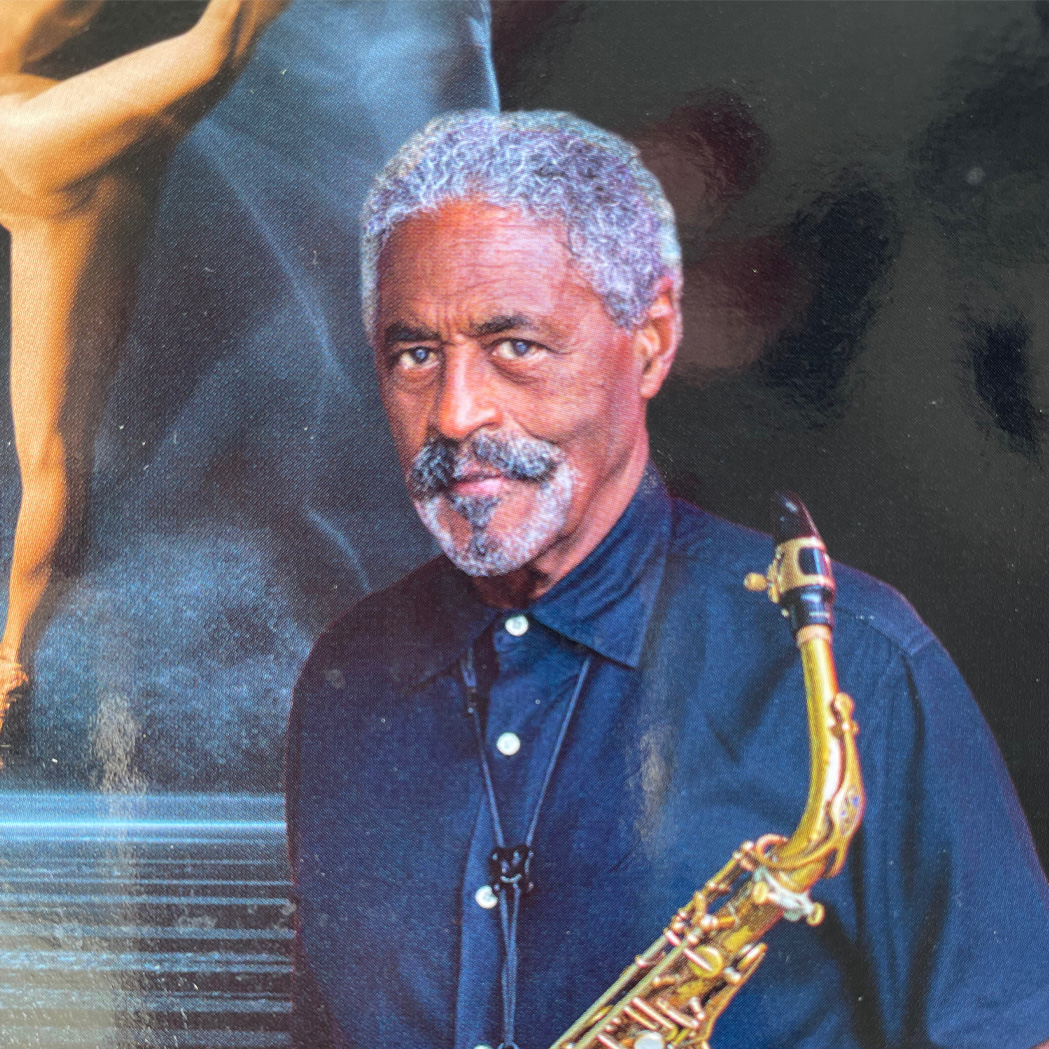
Charles McPherson
Alto-itis the title of this piece is a direct lift from Oliver Nelson’ tune of the same name which you’ll find in my playlist. Nelson was a fluent alto player who became better known as a composer and arranger. You certainly can’t mistake Oliver Nelson’s alto sound and the characteristic ways in which he builds his solos to a crescendo. And as a bonus his solo is preceded by the unmistakable alto sound of Eric Dolphy. Hearing Nelson and Dolphy solo back to back on this track signifies the breadth of sonic and improvisational possibilities that the alto sax could, in the right hands, offer. Oliver Nelson plays in the pocket, Dolphy always explored the outer reaches of tonality.
In my writings for mylifeinjazz I frequently reference the fact that top line jazz musicians all develop a personal sound that makes them immediately recognisable. I think this is particularly true with the alto sax. Compare the burnished vibrato which Johnny Hodges moulded over many decades with Duke Ellington with the complex and vibrato-free harmonic world of Lee Konitz. Or the featherlight tone of Paul Desmond with the mellifluous, blues-drenched sound world of Cannonball Adderley.
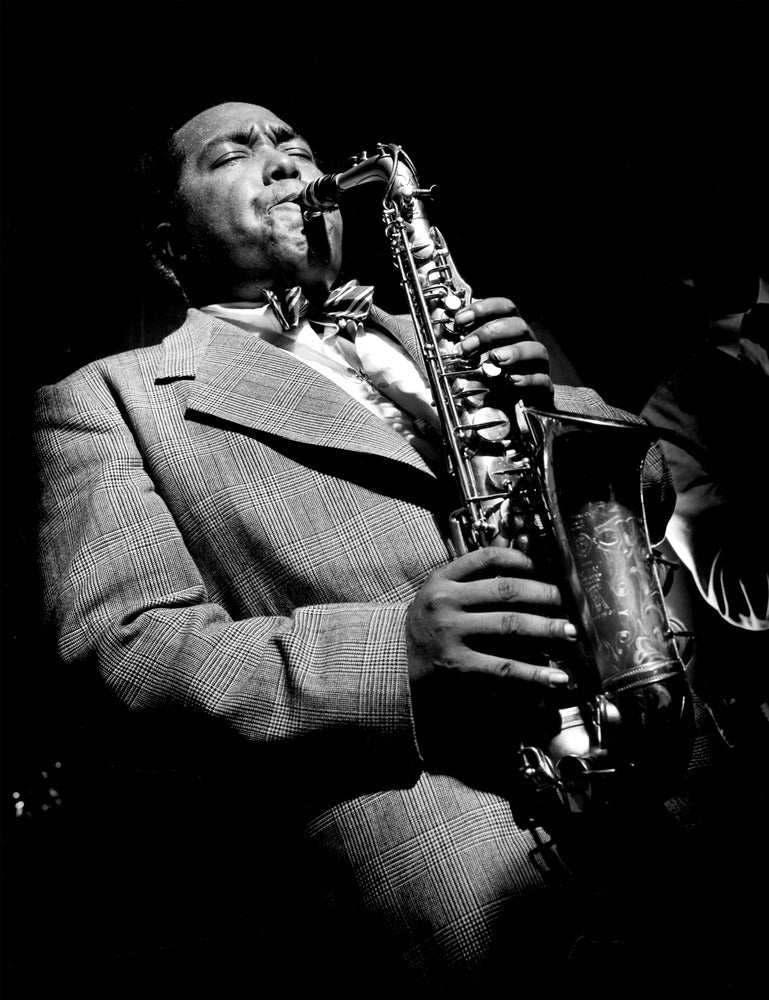
Charlie Parker
None of the alto players who followed Charlie Parker could precisely match the virtuosity and sound of Bird’s alto. This has not stopped many constructing storied careers building on their mastery and interpretations of Parker’s modern jazz language and idioms. Phil Woods, Peter King, Charles McPherson, Bobby Watson and Jackie McLean all come to mind. Charles McPherson continues to exemplify a quite astonishing command of the bebop language bequeathed by Bird on his alto horn as he enters the 7th decade of his professional career in jazz. To my ear McPherson comes closer than any contemporary alto player in capturing and extending the jazz language bequeathed to subsequent generations of alto saxophonists by Bird.
You’ll find a link to an interesting long form conversation between Charles McPherson and jazz pianist Ethan Iverson here.
One of the unique characteristics of the alto sax is its ability to cut though, to soar particularly in the higher register whether within the context of a small group or larger ensemble. Jackie Mclean’s razor sharp sound is an unmistakeable part of the Blue Note back catalogue. David Sanborn’s piercing, vibrato-lite sound stands out even within the organized chaos of Gil Evan’s works for large ensembles, ditto Dudu Pukwana’s gruff alto voice within the sax section of the fabled Brotherhood of Breath. Of the current crop of younger alto players Alexa Tarantino, Sarah Hanrahan, Allison Neale and Lukecia Benjamin are all worth seeking out. You’ll find a track from each in my playlist.
The Playlist
The playlist showcasing the alto’s remarkable range in the hands of twenty two outstanding jazz musicians exemplifies better than any words can the sound world, history, present and future of the alto sax. I hope you will enjoy.
Excellent Danny. Two more for you – saw Steve Coleman at Ronnie’s – intense, cerebral, sometime challenging then melodic and Bird-like. Doesn’t swing though puts down a fearsome groove. And Donovan Haffner ex Tomorrow’s Warriors, worth keeping an eye on. Keep up the good work digging out some gems.