
The London Jazz Festival ran from November 15th to 24th this year. It is by far the biggest jazz festival in the UK and in all likelihood Europe too. From its early origins the festival now covers literally scores of venues large and small and showcases cutting edge jazz from right across the world with a good balance between established star names and up-and-coming next generation artists. The current iteration of the festival has the resources to feature and commission large scale concerts and to provide a platform for emerging talent from the UK (and specifically the exciting London) jazz scene.
This year I attended five gigs in a week covering a wide span of the contemporary jazz universe. It was a truly immersive experience. Before I discuss the individual performances some history.
A brief history of the London Jazz festival
Its origins date back to 1970 and the Camden Jazz festival, my home borough, which scheduled a week-long annual programme of gigs mainly focused on the now defunct Shaw Theatre in Kings Cross. Looking back this was a remarkable initiative, given that jazz was going through one of its leanest periods in the early 70’s. The Camden festival was ahead of its time in programming an eclectic mix of experimental European bands and rarely heard American musicians and cutting edge UK musicians. It was at the Camden Jazz festival that I first heard American musicians of the calibre of Lee Konitz , Warne Marsh and George Coleman live and had the opportunity to hear large orchestral performances led by George Russell, Mike Gibbs and Gil Evans all for the first time.
The Camden festival ran out of road in 1992, and the baton then passed to the late John Cummings’s Serious promotions. What made Serious special (and serious) was their commitment to jazz in all its forms, their willingness to take risks in their programming, their capacity to mentor emerging talent and their close relationships built over many years with jazz musicians and networks world-wide. Anyone who spoke to John Cummings at a Serious gig, as I often did, immediately recognised his deep affinity with jazz- its music, culture and people.
It was during the period of Serious’s stewardship that the festival achieved the scale and status that it currently enjoys
Scrolling up to the present day the LFG has morphed into a mega event with performances booked into venues ranging from the Barbican Hall through to pubs, pop ups, barges and all of London’s established jazz clubs. The BBC’s Jazz Musician of the Year now features as part of the LFG.
Pelin Opcin, the new musical director of the festival described this year’s events as follows,
“Each year, we have a huge list of music to showcase and so many varied themes to highlight From jazz legends to rising stars, musicians from around the world and local talent, there’s so much we care about and it always produces 10 days of gigs that are entirely new.”
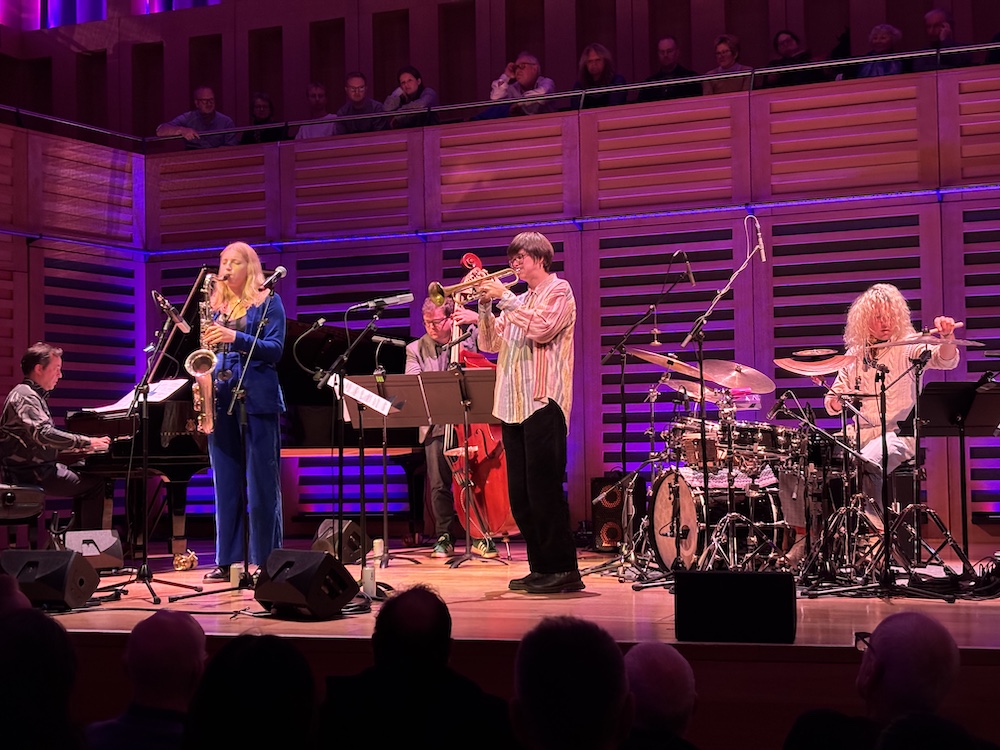
Emma Rawicz – The Real Deal
Saxophonist Emma Rawicz burst on the scene a couple of years ago while still a student at the Royal Academy of Music, she only graduated in 2023. With two albums under her belt and with more in the works she is now a recognized band leader and composer comfortable in a wide range of jazz settings and styles with a growing jazz profile across Europe.
I caught her leading a multi-generational quintet which soared from beginning to end. The music carried echoes of Wayne Shorter throughout. The interplay between Rawicz on tenor sax and Laura Jurd a trumpeter with a great middle range, was subtle and poignant. Jason Rebello very much the elder statesman on piano contributed sensitive accompaniment and was clearly having a ball. This was my first exposure to Nordic drum maestro Anton Eger, and he didn’t disappoint, all action, polyrhythmic but never over-dominant and with a Harpo Marx haircut cut to die for. Conor Chaplin held it all together on bass.
In the interval Emma told me that this was a one-off gig which made the joyful and highly collaborative nature of their sets truly remarkable. Hopefully there will be more to come from this line up.
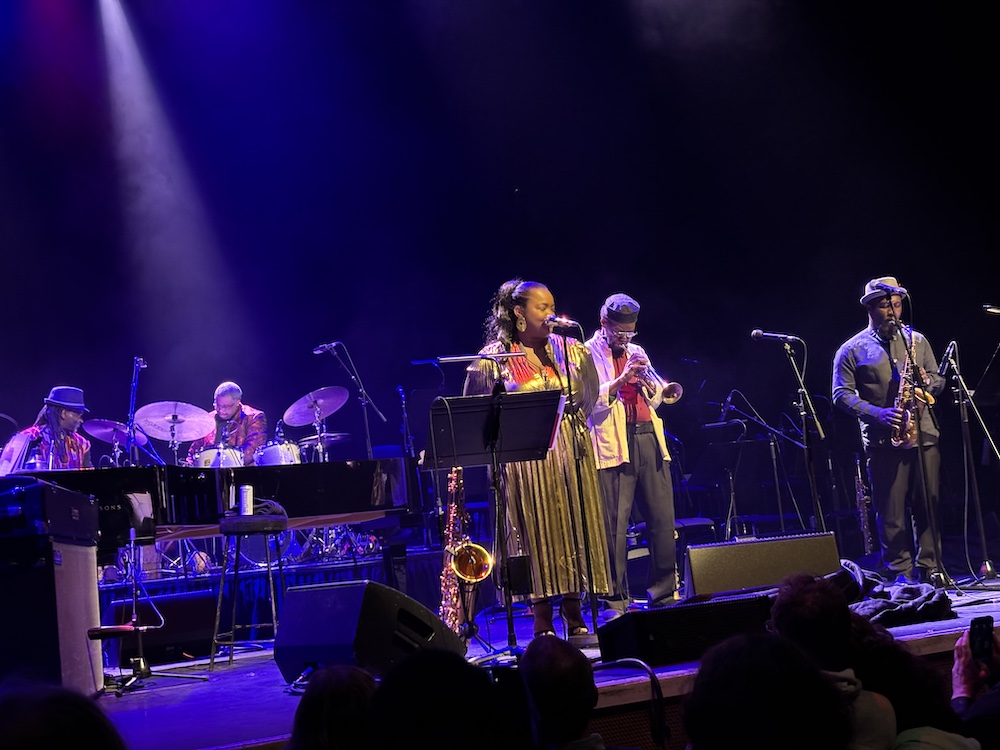
Billed as a two part celebration of Max Roach on the centenary of the legendary drummer, bandleader and activist’s birth led by trumpeter Charles Tolliver who played with and composed for Roach from 1968 through to the mid 70’s.
The first half featured a U.S. quintet plus UK alto star Tony Kofi playing tunes associated with two periods of Roach’s career as a bandleader. Firstly, the sensational quintet he led with Clifford Brown in the mid-50’s until Brown’s tragic death in the car crash that also claimed the life of pianist Richie Powell. The opening number was a lightning fast Richie Powell composition from that era.
The focus then turned to the band that Tolliver joined with selections from Roach’s landmark Members Don’t Get Weary album. The ensemble gelled beautifully with notable interplay between Kofi and the emerging sax sensation Camille Thurman on tenor.
The second half expanded to a full orchestra with an all star UK contingent. The band played largescale compositions, many written by Tolliver. Complex, swinging charts with each section linked by superb solo drums by Darrell Green (a new name to me), replicating the contributions that Max would have made himself 50 years ago. This set also showcased the voice of Camille Thurman- her duet with Danny Piers had an astonishing gospel inflection, very reminiscent of Mahalia Jackson and brought the house down.
This performance reminded of my second trip to New York in 1980 when my friend Andy and I caught Max with his band and a large gospel choir playing a truly memorable concert in a Harlem church.
Tolliver compered throughout stressing his continuing debt to Max Roach as a musician, mentor and political activist While at 82 his playing was largely confined to the scored sections his delight at presenting this tribute to his mentor Max Roach to a sellout crowd shone through.
As ever the sound quality at the Barbican wasn’t great. The big band section playing sounded muddy and indistinct. This needs sorting.
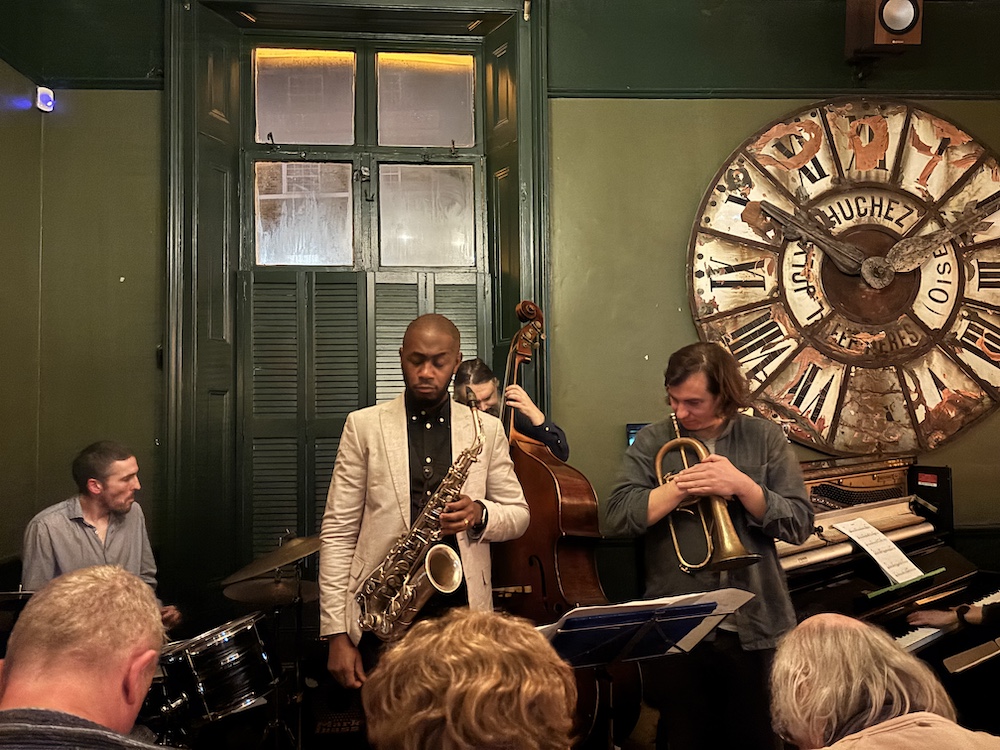
The Parakeet is a pub in Kentish Town a mile up the road from where I live, and I am there often. Its upstairs room is home to a weekly acoustic jazz programme, mainly featuring younger musicians from London and, increasingly Europe. They put on a special festival show, and it was exceptional.
Led by trumpeter Miguel Gorodi, with Nathaniel Facey on alto Alcyona Mick on piano, James Maddren on drums and Callum Gourlay on bass.
Kicking off with a rapid version of Herbie Hancock’s One Finger Snap and a mix of Gorodi originals and jazz standards this was a thrilling performance by any standards. The interplay, technical and sonic ability on display was worthy of a much larger venue. However, the room was packed, and it was a privilege to hear music of this quality that isn’t over amplified and in an intimate environment. Give me this over the Barbican every time.
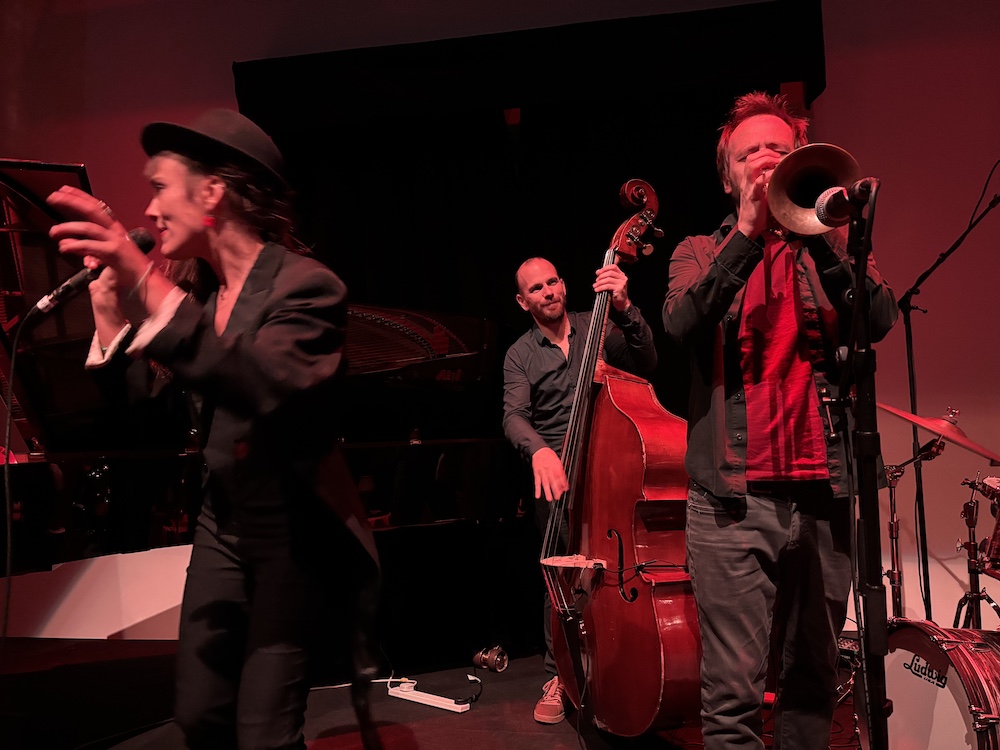
To Ladbroke Hall an imposing new venue in west London which now showcases a weekly jazz super club The music was much better than the execrable, over-priced food.
I have been following French singer Camille Bertault online since early Covid, her sensational solo rendition of Coltrane’s Giant Steps has become a classic. Here it is.
The show was a mix of jazz with French chanson. Her French band provided competent support despite the irritating clowning of the drummer. Bertault has a beautiful voice, great range and real stage presence although her manic dance moves did get a bit irritating.
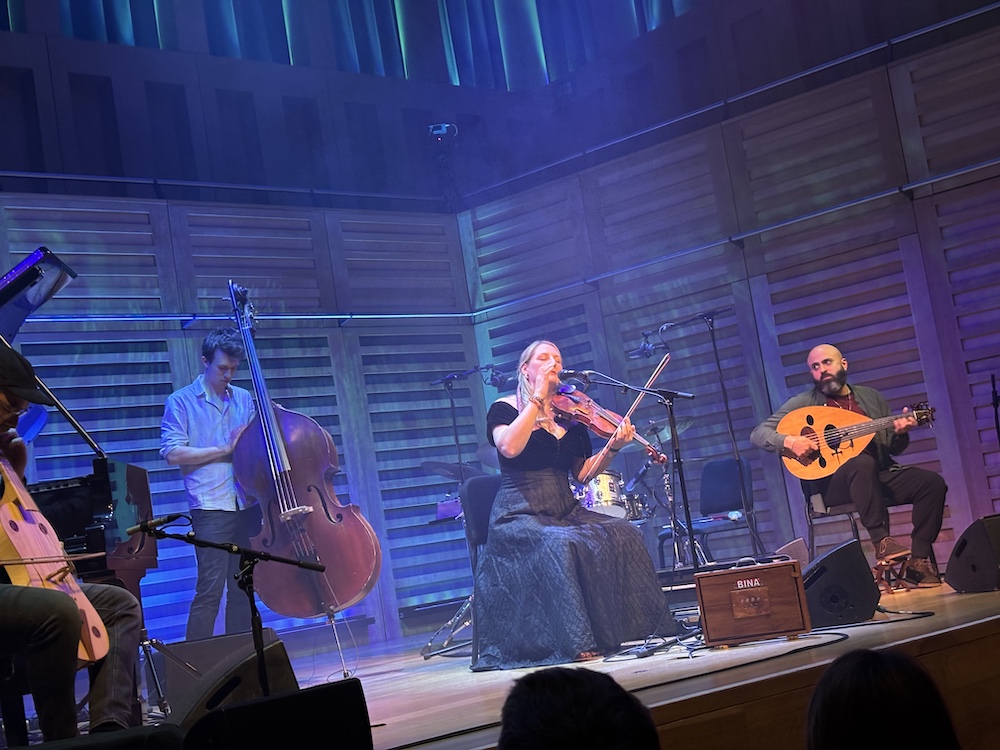
Was it jazz? I don’t think that matters!
The Playlist
A selection of tracks by the featured artists and, of course, Max Roach.
Good reviews of the two concerts I saw with you and I particularly agree with the comment about ‘the execrable, over-priced food’ at Ladbroke Hall😀