
If there is one instrument that is indelibly associated with jazz, it is surely the saxophone. In a recent post-Altoitis I made the case for the alto saxophone-my own instrument. However, over the life span of jazz it could be argued that the tenor saxophone and tenor saxophonists have made a bigger mark on our music.
Coleman Hawkins the first true master of the tenor set the standard in the mid-1930’s with his unique combination of technical brilliance matched with an unmistakable sound palette. Hawkins’s revolutionary recording of Body and Soul recorded shortly after his return to the USA in 1939 following a successful two year sojourn in Europe took the jazz world by storm and is still studied by aspiring jazz musicians today. This classic cut can be found at the top of my playlist.
Lester Young with a lighter tone and a more melodic behind-the-beat improvisational approach emerged via the Count Basie band at more or less time and for many years Pres and Hawk were posited as occupying two opposing poles of mastery of the tenor horn. How seriously the two greats took this personal rivalry is not known, but despite their very different backgrounds, approaches and natures it is fairly certain that they did engage in an epic all night after hours cutting contest in the late 30’s with Lester Young on this occasion, left as the last man standing.
Charlie Parker’s dominance as the leading innovator of the bebop revolution in the late 1940’s focused attention on his alto horn which appeared, in his incomparable hands, to be uniquely fitted as a vehicle for this decidedly complex, high octane brand of jazz. It’s ability to cut through the frantic background provided by bebop rhythm sections established the alto as the most distinctive voice in the bebop soundscape.
And while Bird’s influence continued (and continues) to impact on the development of subsequent generations of alto players from the early 1950’s the tenor began to jostle for first place in the sax hierarchy. Dexter Gordon, Wardell Gray, and Sonny Rollins started the ball rolling, under the direct influence of Charlie Parker, Wayne Shorter, Stan Getz, Joe Henderson , Michael Brecker and John Coltrane continued that dynamic from the mid 1950’s and for the remainder of their careers. Joe Lovano, Joshua Redman, Chris Potter Marius Neset and Melissa Aldana continue to push the tenor sax boundaries today.
In the 1950’s the tenor horn was seen as a better suited vehicle for the dominant genre of soul jazz and the growing interest in two-tenor formations with Johnny Griffin and Eddie Lockjaw Davis setting the standard within this genre in a series of popular and raucous two tenor recordings. The tenor sax also made a much easier transition into the associated and more marketable worlds of rock and roll, rock and funk in later decades.
I’d like to focus on four long gone tenor saxophonists who share the following characteristics- they are pushing for places at the table of jazz greats and are scandalously under-recognised today
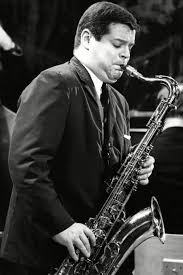
Tubby Hayes (1937-73)
Tubby Hayes and Johnny Griffin were known for their speed, Paul Gonsalves and Bobby Wellins for their instantly recognisable tone.
Both Tubby Hayes and Johnny Griffin entered the front lines of UK and USA jazz as ingenues, seemingly fully formed within jazz culture and language in their teens. Both could play and improvise seemingly effortlessly at crazily fast tempi, and both very quickly established their credibility with their older peers. I feel that both suffered from being typecast as saxophonists who were primarily interested in how hard they could put their foot down on the accelerator pedal. This is a shame since they were both capable of much more, indeed Hayes was almost as impressive on his side instruments-flute and vibes. He was also a more significant composer and an arranger for big bands than was Griffin whose primary skill lay in re-explorations of the established modern jazz repertoire. Griffin had the advantage of having studied, played and recorded with Monk at an early stage in his career. Hayes sat in at short notice with the Ellington band on a UK tour when tenor star Paul Gonslaves had gone AWOL and did so seemingly effortlessly. Word about him spread back to the USA where he subsequently made a couple of recordings in the 1960’s -very rare for a UK musician at that time.
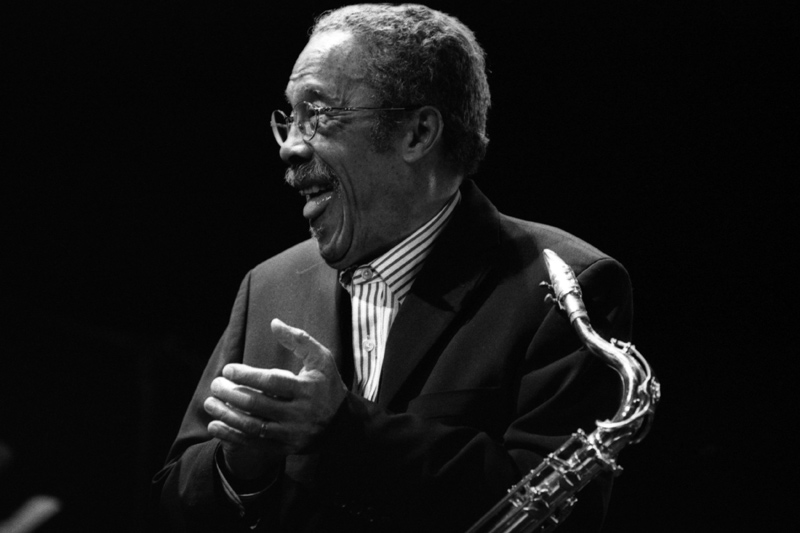
Johnny Griffin (1928-2008)
Sadly, I never heard Tubby Hayes although I have spoken to many who did, going back to his prime from the mid 1950’sthrough to the late 1960’swhen his heroin addiction and heart condition began to take their toll.
I did hear Griffin many times most notably at a pub gig with a British pick up band in the 1970’s. He battered the unfortunate bass player into early retirement by the increasingly high tempo tunes he called that night. It felt almost too cruel to witness.
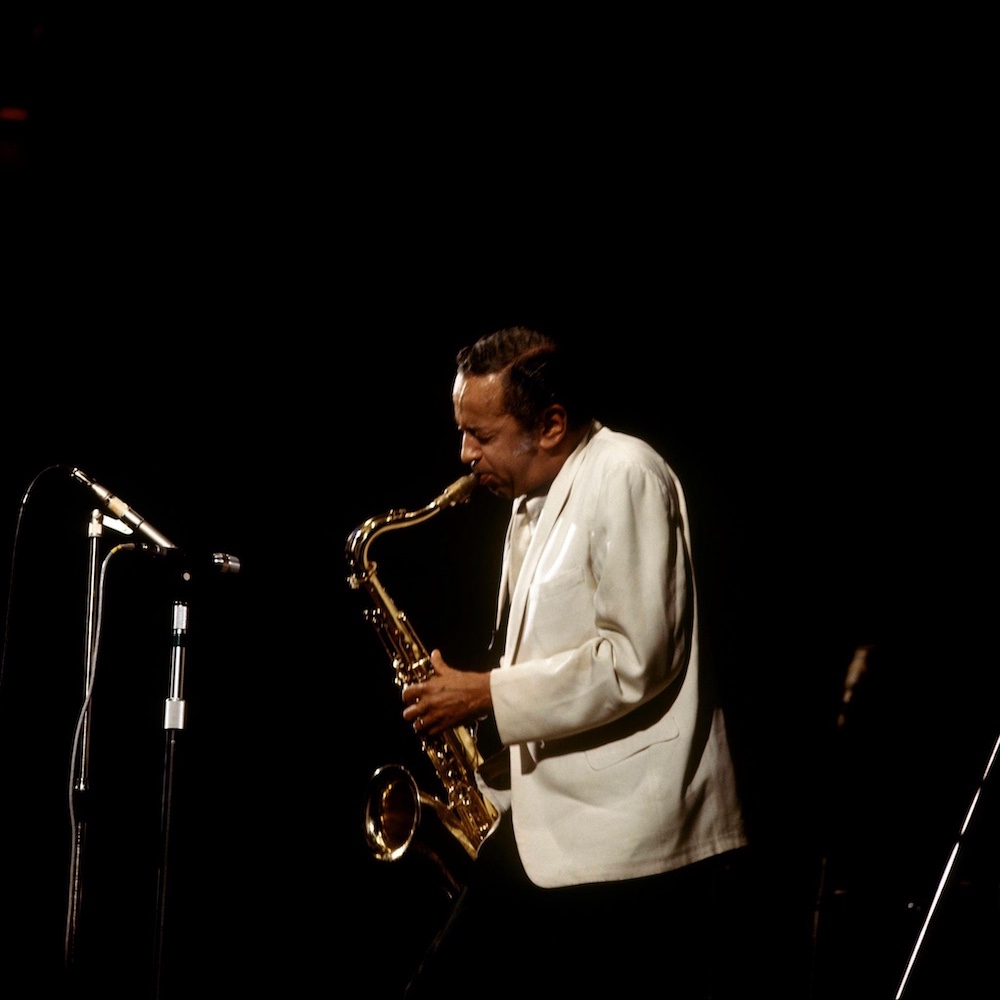
Paul Gonsalves (1920-74)
Both Paul Gonsalves and Bobby Wellins, born respectively in Brockton Massachusetts and Glasgow are remembered primarily for their utterly unique sounds on the tenor horn. Gonsalves, despite his chaotic addictions to drink and narcotics was a mainstay in the great Ellington bands of the 1950’s and 60’s. His multi chorus solo at on Diminuendo and Crescendo in Blue at the Newport Jazz festival in 1956 did more than anything to mark the second coming of Duke Ellington and his orchestra. listen out for it and the rapturous response of both the audience at Ellington on my playlist. His tone had a breathy quality that could also go flinty when needs be and no one could out swing Paul Gonsalves.
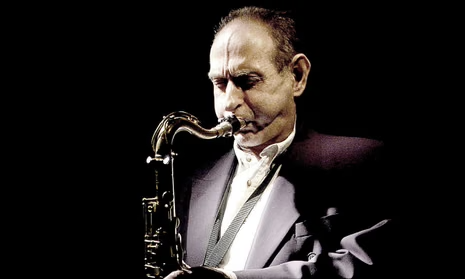
Bobby Wellins (1936 -2016)
I heard Bobby Wellins many times both with different iterations of Stan Tracey’s bands and with his own groups. Wellins’s jazz life was paused in the early 1970’s due to his own addiction issues, he relocated to the south coast and re-launched a successful, self-produced career for his last 30 years. Wellins has a totally unique sound, once heard never forgotten. He also had a remarkable ability to hit bottom Bb on his horn at the drop of a hat. He was a true stylist and a great advocate for modern jazz in all its manifestations.
The Playlist
My playlist takes you on a tour of cuts from over twenty truly great practitioners of the tenor sax including my four featured artists. You will find a classic Griffin/Lockjaw joust and the only known recording of Sonny Rollins and John Coltrane together in the same studio-hence my title, Tenor Madness! In case you’re wondering Trane takes the first solo.
Recent Comments