
Jazz standards occupy an elemental place within the music, both historically and contemporaneously. There is an equivalence I suppose to the core repertoire of any aspiring classical musician in as much as all jazz professionals seek and need to be regarded as consummate interpreters of jazz standards.
Standards take two forms in jazz: tunes from the great American songbook drawn from the glory days stretching from the late 1920’s through to the early 1960’s and original compositions by jazz musicians themselves. In the former case the attraction and longevity of a “tin pan alley” standard lies as much in their harmonic underpinnings and possibilities as in the melody and lyrics. Dexter Gordon is by no means the only great jazz musician who insisted on a deep knowledge of the lyrics of the tunes he played, particularly ballads. In the latter case jazz originals become standards when enough musicians decide to cover them. Monk’s Round Midnight, Bird’s Anthropology and Miles Davis’s All Blues all fall into this category.
Both types of jazz standards become standards for the same reasons-they are intriguing melodically and/or harmonically and offer a platform for jazz musicians to express their originality and, in some cases, their genius.
Mastery of both forms of jazz standards are considered an essential sine qua non for practicing jazz musicians. Saxophonist, Lee Konitz devoted a lifetime to squeezing every improvisatory possibility out of All The Things You Are a show tune with lyrics of such cheesiness that the original show version rarely hits the airwaves. Art Blakey tasked various iterations of his Jazz Messengers with playing Bobby Timmons’s Moanin long after Timmons’s passing (literally).
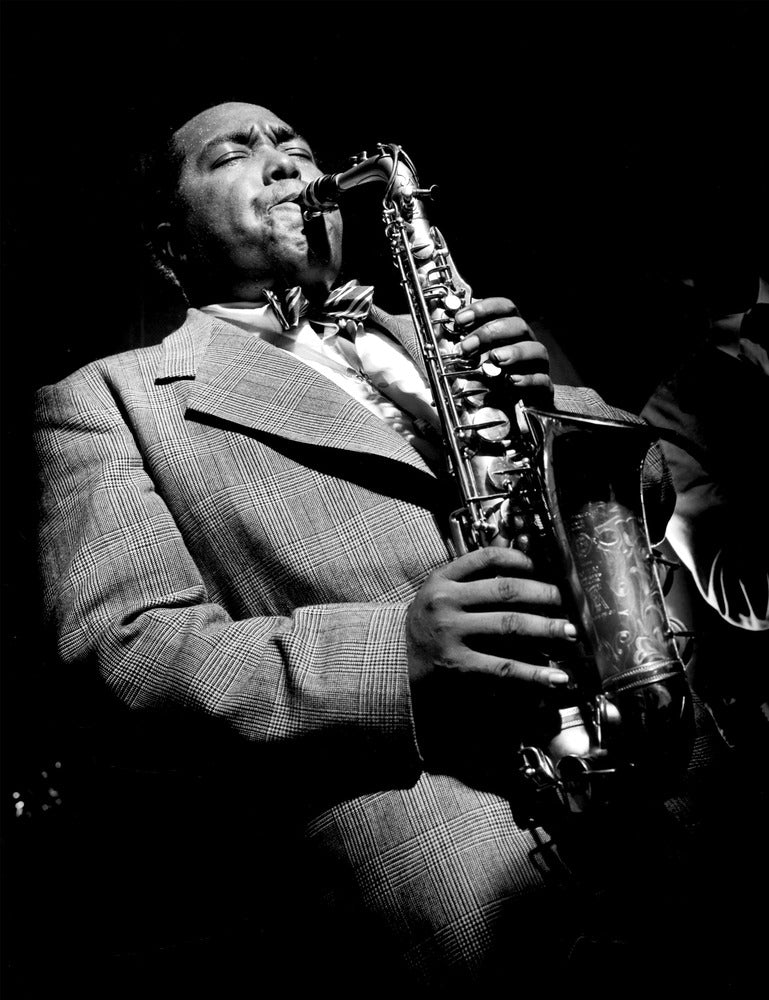
Charlie Parker
At the end of his short life Charlie Parker went into the studio a to record a couple of albums with string accompaniment. He claimed that these recordings were his proudest achievement. All of them gave Bird the chance to soar over a standard repertoire with, in my view at least a fairly plodding set of string arrangements. It was Parker’s astonishing fluency in handling this familiar material that stands out to this day.
There is also a hybrid spin on the jazz standard; the contrafact This is where a composition is based on the chord progression of a pre-existing standard melody retitled and often reharmonized to emerge in a different form, one that is still recognizably based on the original tune. Musicians from the post war bebop generation were particularly attracted to contrafact compositions. Literally scores of compositions were based on George and Ira Gershwin’s I’ve Got Rhythm. All jazz musicians are attuned to spotting and adapting «rhythm changes”. As examples Monk’s 52nd Street Theme, Parker’s Anthropology, Ellington’s Cotton Tail and Sonny Rollins’s The Bridge along with countless others are all based on the chords of I’ve Got Rhythm.
This article is prompted by an interesting recent blog by Ethan Iverson. Iverson is a supremely gifted pianist who arrived in the spotlight in the early noughties as part of the genre-busting jazz trio The Bad Plus Since then he has pursued an impressive solo career including a number of recordings balancing original material with his take on jazz standards. Ethan has serious credentials as a public intellectual through his intriguingly entitled Transitional Technologies blog which appears on Substack. I can highly recommend it. Here’s the link https://iverson.substack.com/
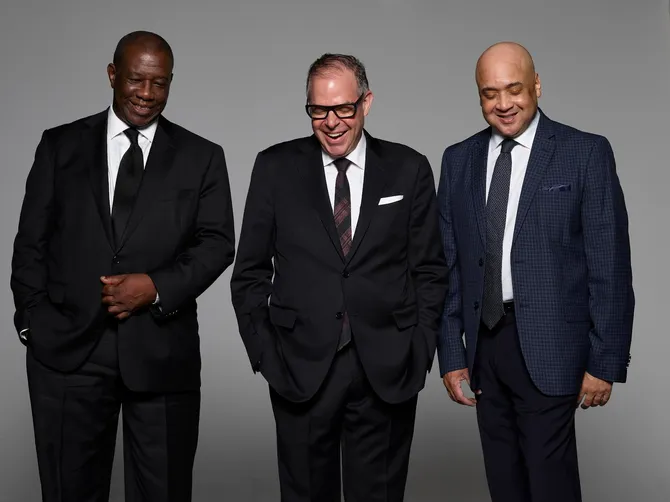
Bill Charlap Trio
In a recent post, Standard Issues Iverson cites an incendiary article by a fellow Substack writer, Bill Freeman whose blog goes under the name of Burning Ambulances. Freeman clearly loathes both the idea and the status of the jazz standard as you will see from the following incendiary quote,
“In 2024 why does the piano trio album include versions of All The Things You Are, In Your Own Sweet Way and Round Midnight? Write your own music of fuck off. If you want to include ONE standard in a set/session because it’s a tune that you LOVE fine. Bit the entire album of standards can go straight to the dumpster out back.”
Freeman has in his sights one of the most fabled current practitioners of the jazz standard: pianist Bill Charlap who with his 20+ year trio comprising himself, Kenny Washington on bass and Peter Washington on drums, has devoted a large portion of his musical life to creatively reimagining the (say it softly) jazz standard. You could say that Charlap is a living jazz standard master. Indeed, he is.
I’m with Iverson on this one. If Keith Jarrett can devote more than 30 years of his life to his standards trio then that is good enough for me. Where the challenge lies vis-à-vis contemporary approaches to the great American songbook is to use them as a vehicle for musicians’ own creativity, not as a museum piece or a series of smooth jazz performances only fit for elevators.

Ethan Iverson – Technically Acceptable
Bill Freeman is the author of a just published and much anticipated biography In the Brewing Luminous: The Life & Music of Cecil Taylor. He charts the life of the free jazz master pianist and musical disruptor Cecil Taylor-referenced in my most recent blog where I remarked that Taylor’s early recordings did indeed include some very radical takes on jazz standards. Where I think I agree with Bill Freeman is that almost 100 years after All The Things You Are was first written there is little reason for a straight performance or recording of that tune. It demands to be reconstructed, to be re-imagined to be refreshed. This after all lies at the very heart of what makes jazz so important, vital and distinctive.
And as a saxophonist myself part of a modern jazz quartet which incorporates standards into all our gigs our hope and aim is to find something different to say about these tunes each time.
The Playlist
In putting my playlist together, I thought it would be interesting to pair two different versions of the same standard to give an idea of the infinite possibilities available to accomplished and great jazz musicians’ approaches to the same tune. I couldn’t resist the final two choices, Sonny Rollins playing How Are Things In Glocca Morra? A definitive non-standard that only he would play. And Evan Parker the dedicated British free jazzer teaming up with Dave Green’s quartet to produce a respectful version of Duke Ellington’s A Flower is A Lovesome Thing. Proof if you needed it that the jazz standard is alive and kicking.
Recent Comments