
One of the central themes on my reflections on jazz lies in the immediately recognisable qualities of jazz performers. Once you have heard Miles Davis or Charlie Parker for the first time the uniqueness and individuality of their sound, tone and style remains lodged in your mind, quite possibly forever. The same goes for musicians a couple of steps below the pantheon of jazz greats-I’m thinking about Bobby Wellins and Paul Gonslaves, both saxophonists, pianists Red Garland and Wynton Kelly and bass players Paul Chambers and Ray Brown. These are just a tiny sample of a litany of jazz instrumentalists part of whose claims to fame is how immediately they stand out from the crowd.
I am not, of course suggesting that this notion of immediate recognition is unique to jazz, it is a feature of all musical genres, however one of the unique hallmarks of jazz going way beyond technical competence or immersion within the jazz tradition and knowledge of the core repertoire is the obligation to develop your own voice on your instrument, a distinctive calling card to fellow musicians and audiences alike. Jazz literature is knee deep in interviews with and quotations from both top level and aspiring jazz musicians on the primacy of developing or finding your own sound, a key element in earning your ticket to the jazz hall of fame.
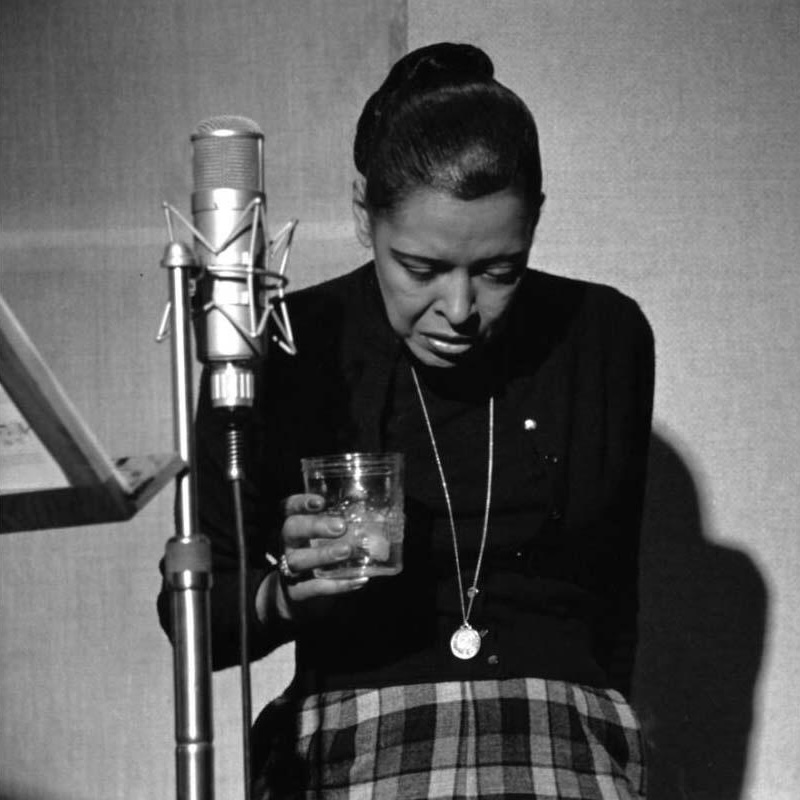
Billie Holiday at her last recording session
And of course, the same imperative applies to jazz vocalists. To really establish your credentials as a jazz singer your voice has to become your calling card. This has held true from Bessie Smith through Billie Holliday, Sarah Vaughan and Ella Fitzgerald right up to Kurt Elling, Cecile McClorin Savant and Norma Winstone-three generations of contemporary jazz vocalists.
As with front line instrumentalists, jazz vocalists earn their dues through their individual interpretations of compositions, particularly relating to the Great American Songbook and jazz standards and their capacity to improvise. It is interesting to compare the original recordings of Broadway musicals with jazz singers’ interpretations of the same material. Broadway recordings stick primarily to the notes on the score, jazz singers take the score, or the head in jazz parlance as a starting point, a launch pad to their own interpretation. A good example would be to compare Chet Baker’s classic treatment of You Don’t Know What Love Is with an original recording-you will find Chet’s version on my playlist.
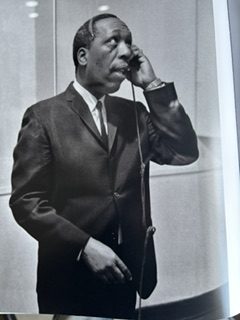
Eddie Jefferson – Photographed by Steve Schapiro
For Betty Carter, Eddie Jefferson and Bobby McFerrin improvisation lies at the centre of their musical zeitgeist. Betty Carter, particularly in live performances would often give tunes only the briefest of introductory mentions before essentially soloing, in the same was as a saxophonist or trumpeter. Eddie Jefferson had a brief period of fame in the 1950’s writing his own lyrics to contemporary jazz charts and adding choruses of free improvisation into the mix. McFerrin shot to fame using his remarkable voice (and body) almost like a one person orchestra.
Jazz singers cover as wide a range of styles and technical accomplishments as any jazz instrumentalist. Ella Fitzgerald had a three octave range, peerless enunciation, and could improvise at the drop of a hat, and frequently did. Billie Holliday, particularly in her final years had a limited vocal range and repertoire, didn’t scat but could imbue a single phrase with more meaning than seemed conceivable. And, of course her distinctive voice, at all stages of her tragically short career was peerless.
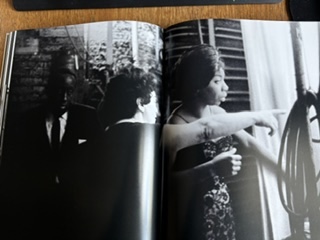
Nina Simone at the Apollo Theatre in Harlem – Photographed by Steve Schapiro
In other eras Ella and Sarah Vaughn could both have had stellar careers on the opera stage. Nina Simone had both the talent and ambition to become a concert pianist had not institutional racism intervened, listen to her astonishing JS Bach influenced piano improvisations in her early recording career to get a sense of her deep grounding in classical music. Love Me Or Leave Me on the playlist exemplifies Nina’s piano playing in her prime. Singers as different in genre as Shirley Horn and Blossom Dearie were happier providing their own piano accompaniment and developed piano styles designed to optimally showcase their very particular vocal styles.
“Scat singing” is a term that is now rarely used. It first surfaced in the 1940’s in the hands of people like Cab Calloway-who had a huge popular following and Slim Gaillard whose humorous improvisations and in Gaillard’s case drew on his “Vout-o-Reenee» language which was deliberately non-sensical. Fats Waller’s popular vocals were also early examples of scat., sometimes obscuring his prodigious talents as a pianist. Gailard is frequently referenced as a forefather of contemporary rap music
Each of these singers came to prominence in the big band era when no big band was complete without one or more headlining singers. This was the environment in which Frank Sinatra, Mel Torme, Tony Bennett, Joe Williams and Billy Eckstine established their reputations and huge popular followings. Crucially, live big band performances, required vocalists to learn how to project their voices in front of a full orchestra with basic amplification to packed audiences in large dance halls and theatres. As the big band era declined in the 1950’s vocalists adapted their big band styles to the more intimate environment of trios, duos and small combos. Ella and Sarah Vaughan were both outstanding examples of this successful transition.
In the hands of Ella, Betty Carter, Sheila Jordan and Mark Murphy scat singing, often with wordless lyrics riffing on the melody’s underlying harmonies established these singers as front line improvisers, historically the province of instrumentalists. Such contemporary vocalists as Ian Shaw, Kurt Elling and Camille Bertaud stand on the shoulders of these pathfinders.
Achieving individuality and immediate recognition provides an identical challenge to singers as is the case with instrumentalists. They have achieved equivalent status as improvisers within the contemporary jazz world, and none too soon.
The Playlist
I hope that you will enjoy the playlist that features all the artists name checked here and many more besides.
Spoiler alert…have you spotted the wild card entry?
(Joni Mitchell a jazz singer?? Definitely!)
Recent Comments